Building a Moss Path in a Wet UK Climate: Drainage, Base and Aftercare
October 07, 2026 - Garden Paths
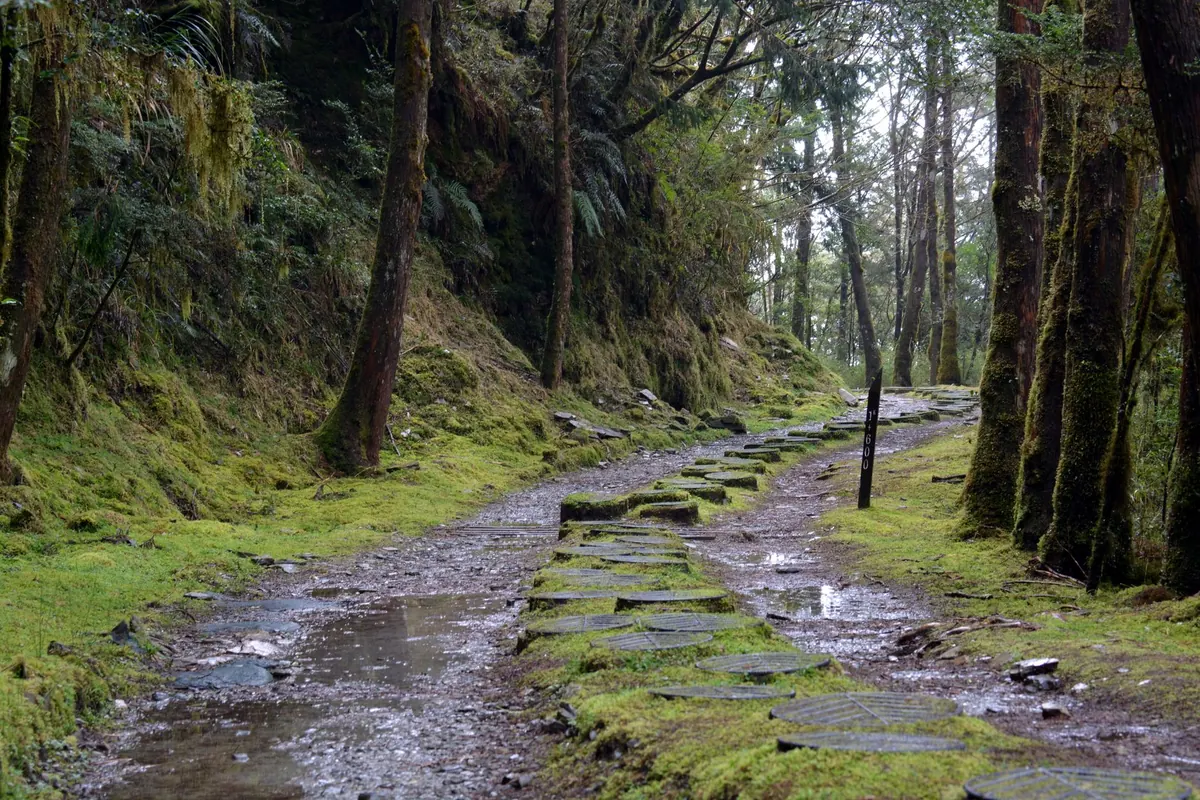
Moss on a garden path divides people. Half of us spend March scraping it off the slabs, the other half are quietly trying to coax it into the gaps on purpose. If you are in the second camp, Britain's damp, mild climate does a good deal of the work for you. The harder question is which moss to encourage. Put a woodland cushion in full sun on the route to the compost heap and it will have vanished by July. Choose well, though, and a moss path greens over in a season or two, softens the edges of your paving and asks for almost nothing beyond a bit of patience.
What follows is a working comparison of the mosses that genuinely suit UK paths, sorted by how much footfall they take, how much shade they want and how they handle our weather.
Appearance comes last. Four practical things decide whether a moss will survive where you plant it:
The starry, yellow-green moss that colonises every neglected lawn in the country. Each shoot ends in a spray of curved leaves, and it knits together into a springy carpet that shrugs off light treading and even the mower. For a stepping-stone path through grass, or a lawn edge you want softened, it is the obvious first choice. It wants moisture and light shade to half sun; on dry, baked soil in full sun it browns off and thins. Heavy daily use will wear a track through it, so keep it to the margins of a busy route.
Tiny, silvery, compact and almost impossible to kill. You have seen it in pavement cracks, gravel drives and the joints of brickwork, which tells you everything: it tolerates compaction, drought, full sun and dry shade. It will not give you a deep cushion, but for a path you actually walk on every single day, this is the one to encourage. Sow it into the gaps between setts and slabs and let it fill the lines.
Under a hedge or along the shaded side of a building, you can afford to be more ambitious.
Hypnum cupressiforme (cypress-leaved plait moss) is the best all-rounder for shade. Flat, feathery, woven tightly against stone and soil, it forms sheets rather than cushions and copes with moderate treading better than its delicate appearance suggests. It loves humidity and will creep up steps and wall bases.
Thuidium tamariscinum (common tamarisk moss) is the most beautiful of the group, with fern-like fronds in vivid green. It is also brittle. Use it on path edges, banks and the margins you look at but do not step on, and it will reward you. Underfoot, it disintegrates into fragments.
Plagiomnium undulatum suits heavy, damp soil in deep shade, with glossy, wavy leaves on stems that arch over stone. Excellent beside shaded steps and along the foot of a wall.
Where a path bakes, choose colonists rather than woodland species. Ceratodon purpureus (redshank) is the first moss onto gravel and bare ground, bright green with reddish stems, tolerant of sun and drought. Bryum capillare is a neat, dark green companion for cracks and mortar lines.
Here is the most useful thing you can do: look at what is already growing in your path before you buy or transplant anything. Volunteer moss has already passed the test of your light, soil and footfall. Identify it, then help it spread rather than fighting it and importing something that will sulk.
Moss has no roots, so it draws water and nutrients from the air and simply needs something rough to cling to. Scratch the surface lightly, press fragments or divots firmly into damp ground, and keep them watered through their first two dry summers. After that, work with the weather rather than against it.
Keep leaf litter off in autumn, because a mat of wet leaves smothers more moss than any drought. Brush rather than scrape, and never reach for a pressure washer or a general weedkiller if you want moss to stay. Skip the fertiliser and lime; richer, sweeter soil favours grass and weeds, which will outcompete your moss within a season. A little hand-weeding in spring is all the maintenance most paths need.
Finally, be patient and be consistent. Let the moss decide where it wants to go, guide it gently towards the shape you want, and accept that a living path will always look slightly different from one year to the next. That, after all, is the point of it.
Photo: Annie Chen / Pexels

How to build a moss path that survives British rain: the right base layers, sensible drainage, suitable moss species...
Brown moss in a UK summer is usually dormancy, not death. Here's how drought, heat and sudden light cause it, and...
Copyright © 2026 Moss Path. All Right Reserved.